
Last updated November 16, 2026
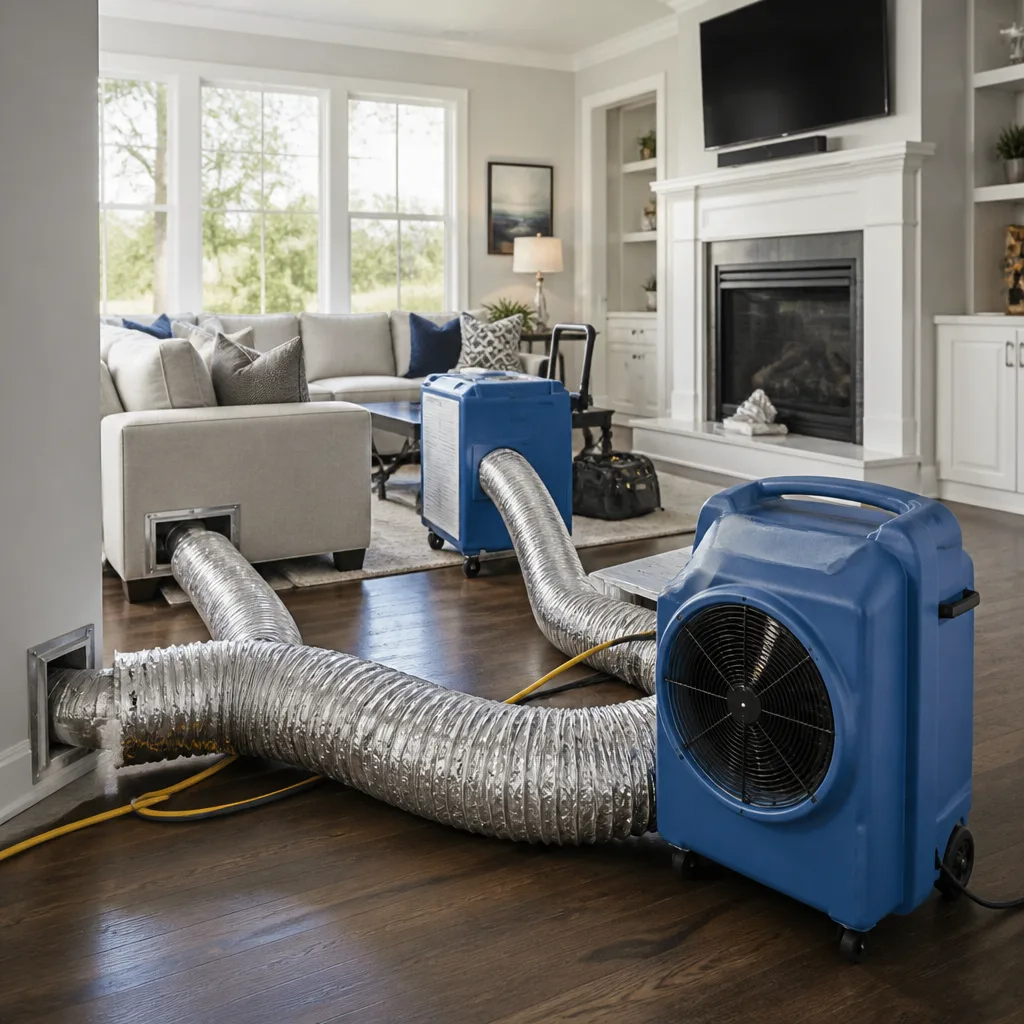 Whole-home duct cleaning
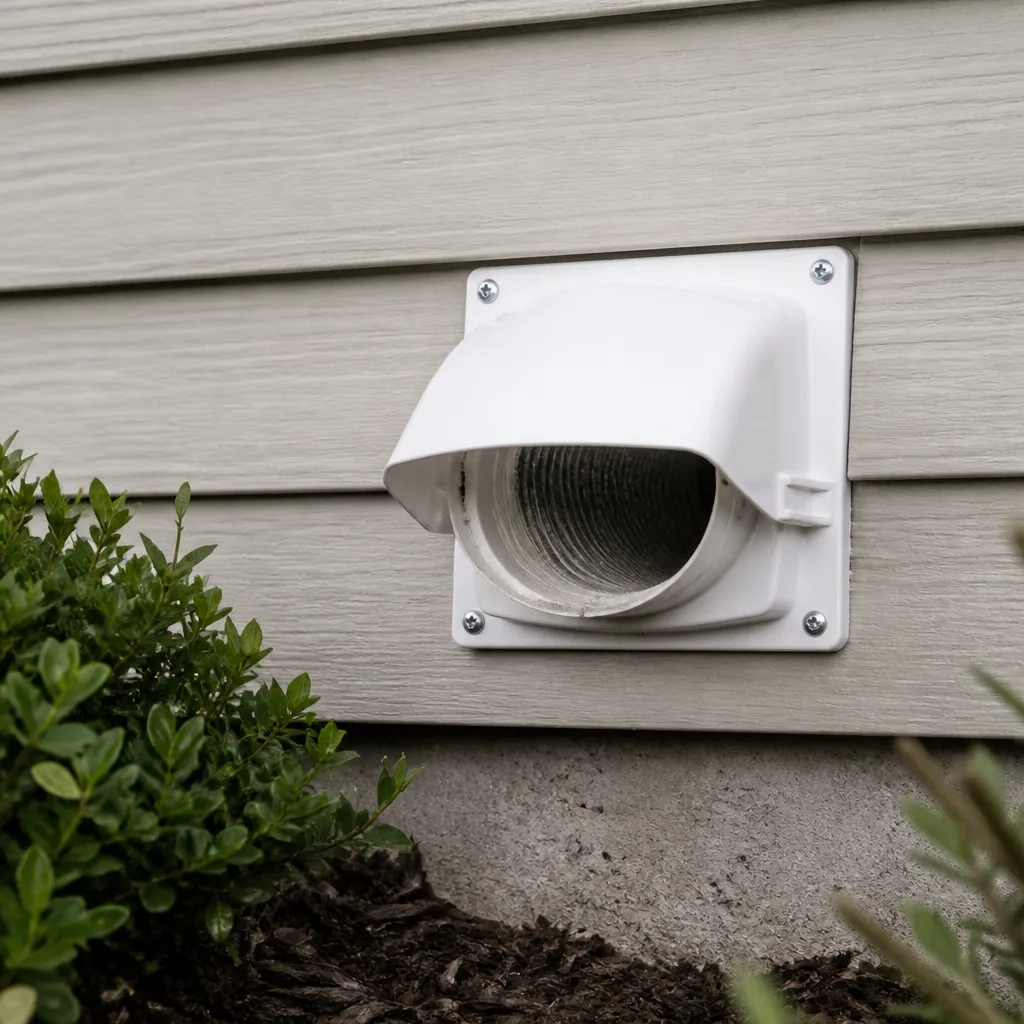 Dryer vent cleaning
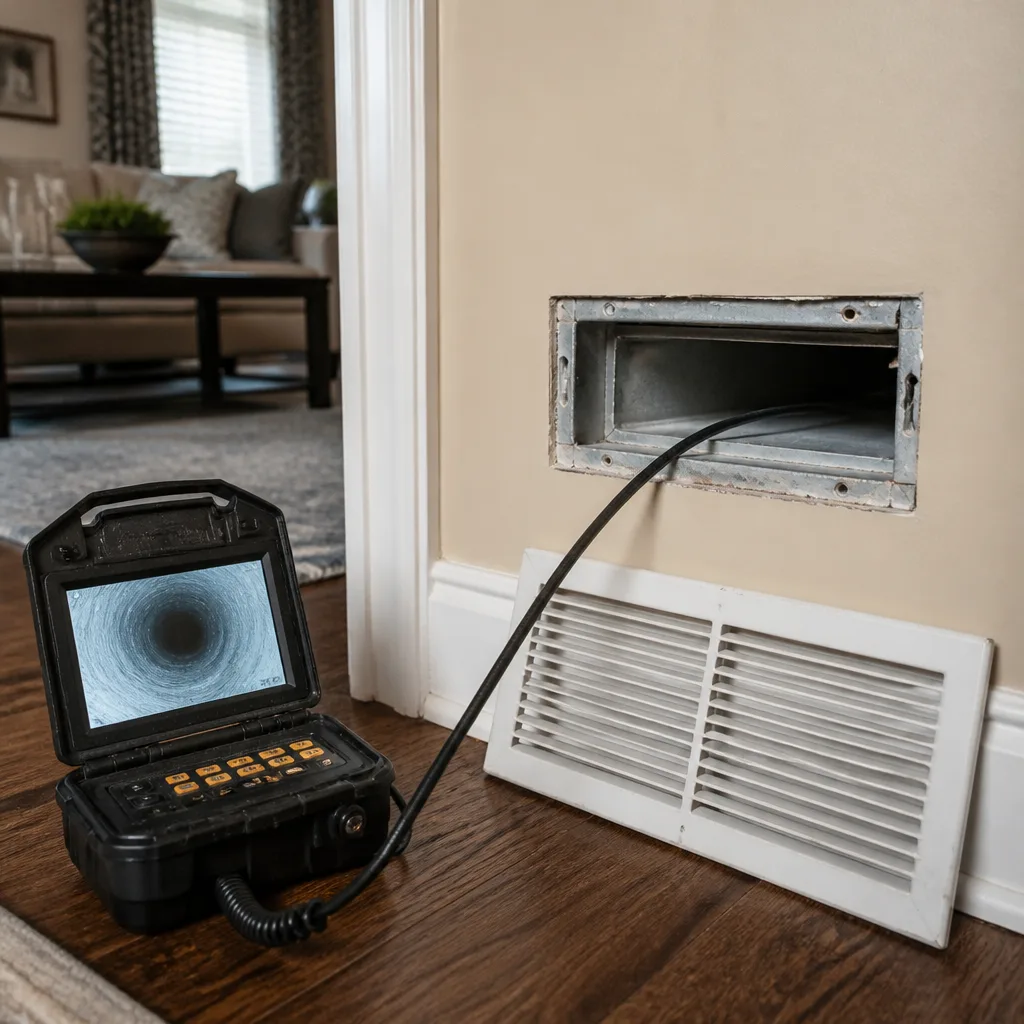 Camera inspection
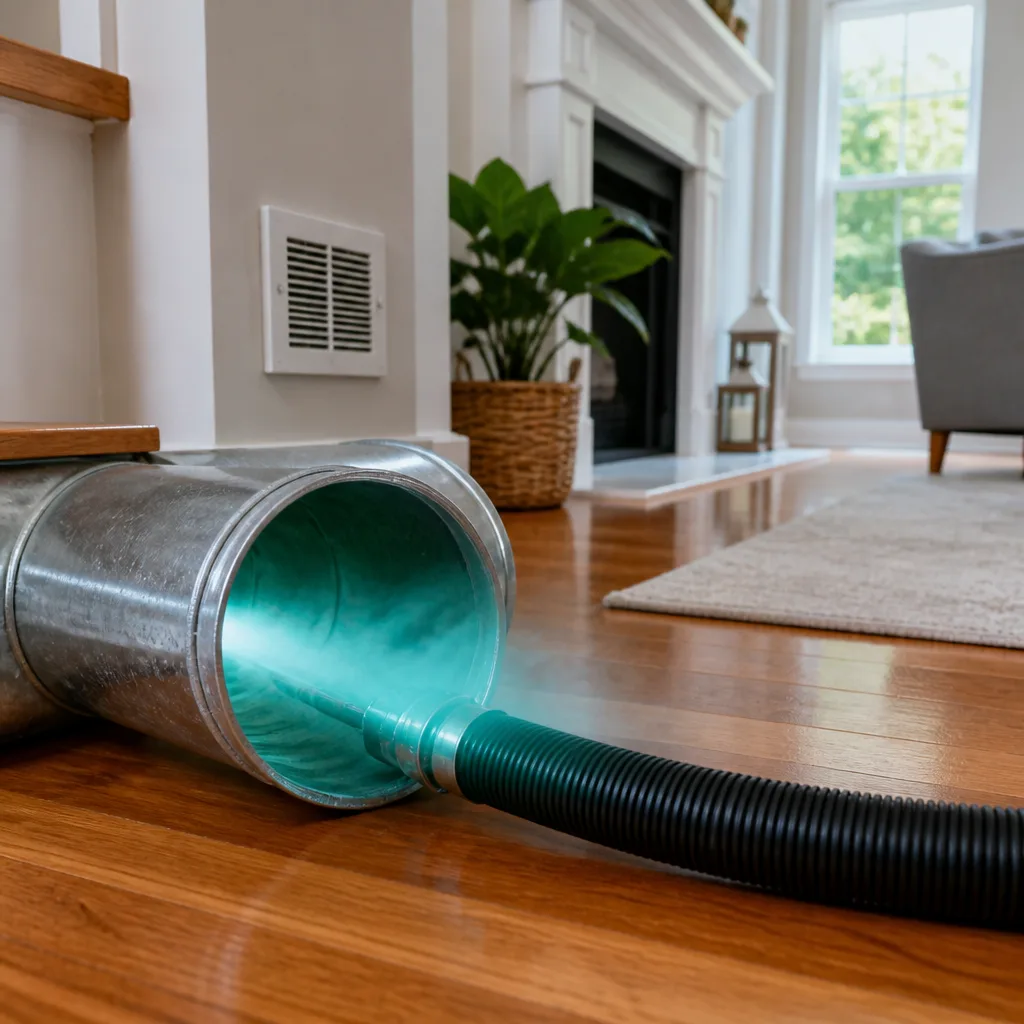 Sanitizing & deodorizing
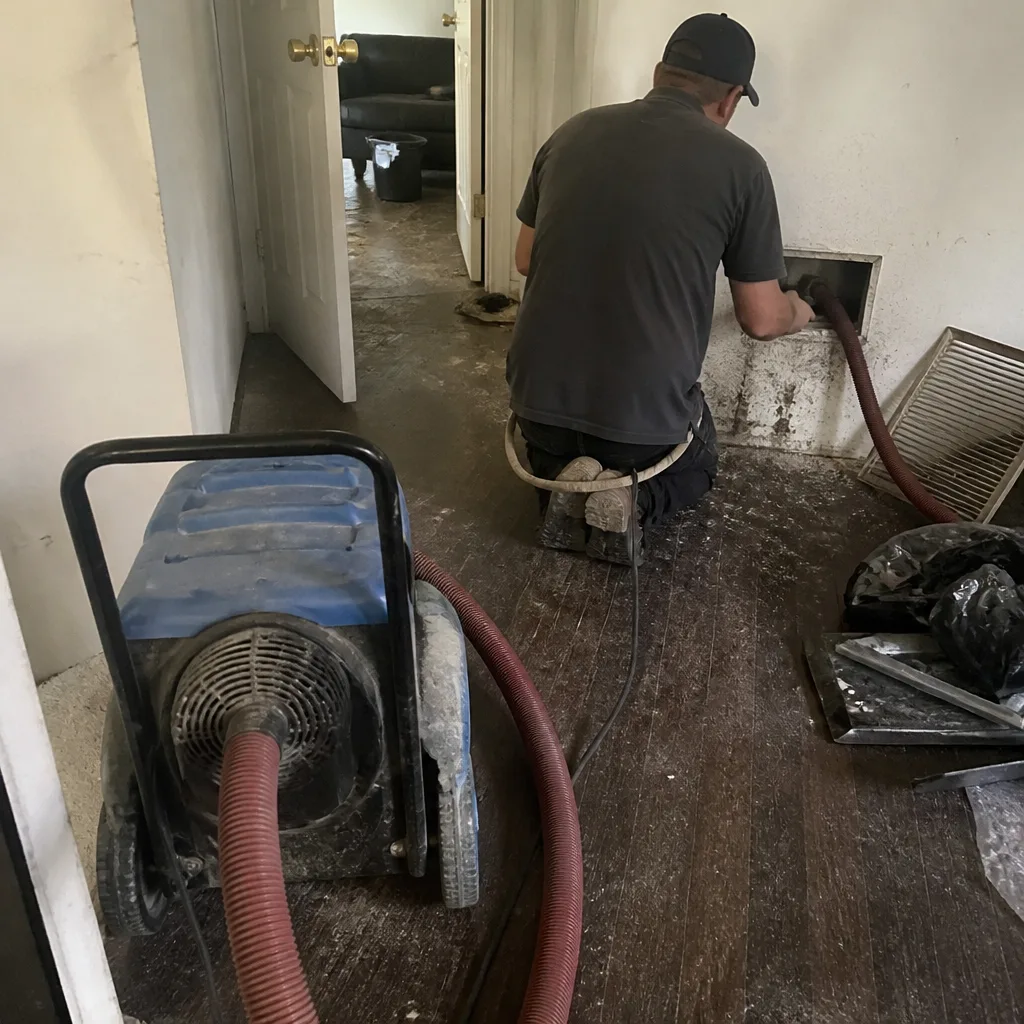
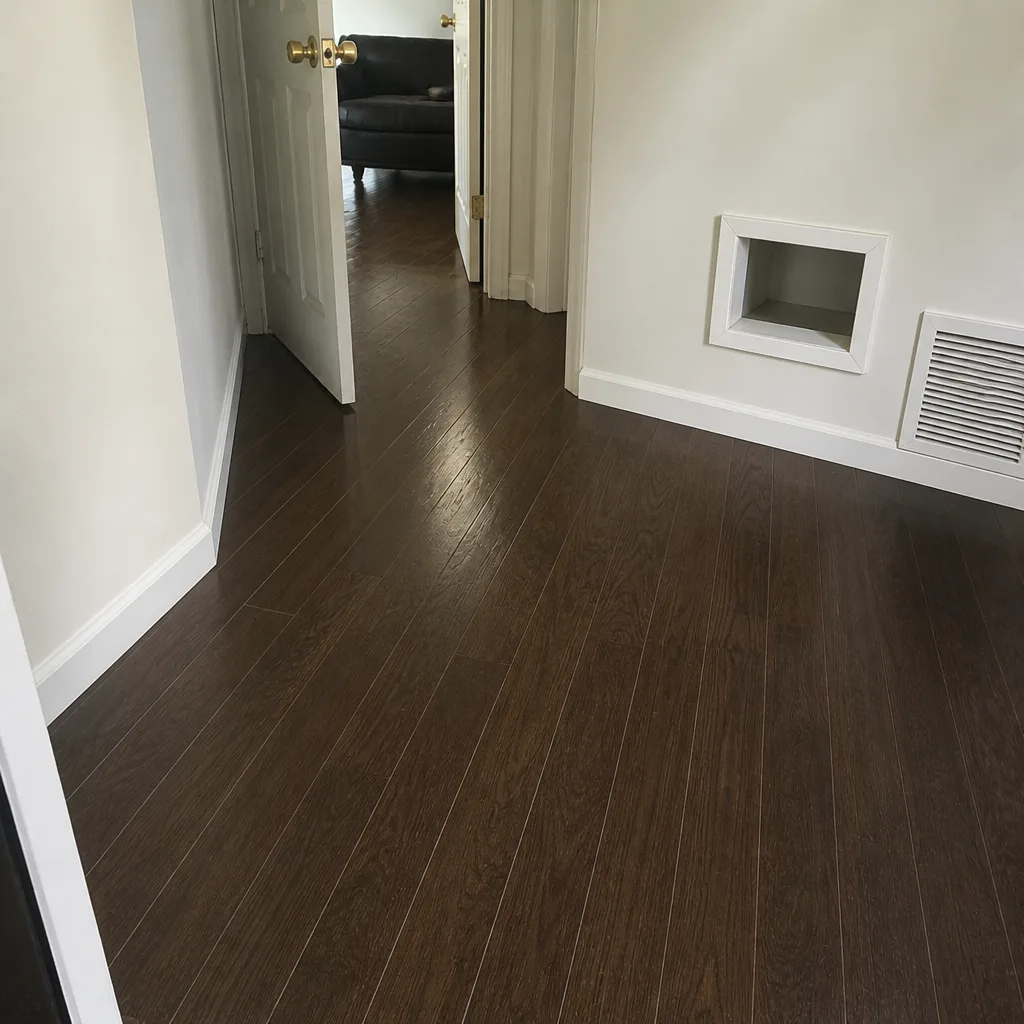
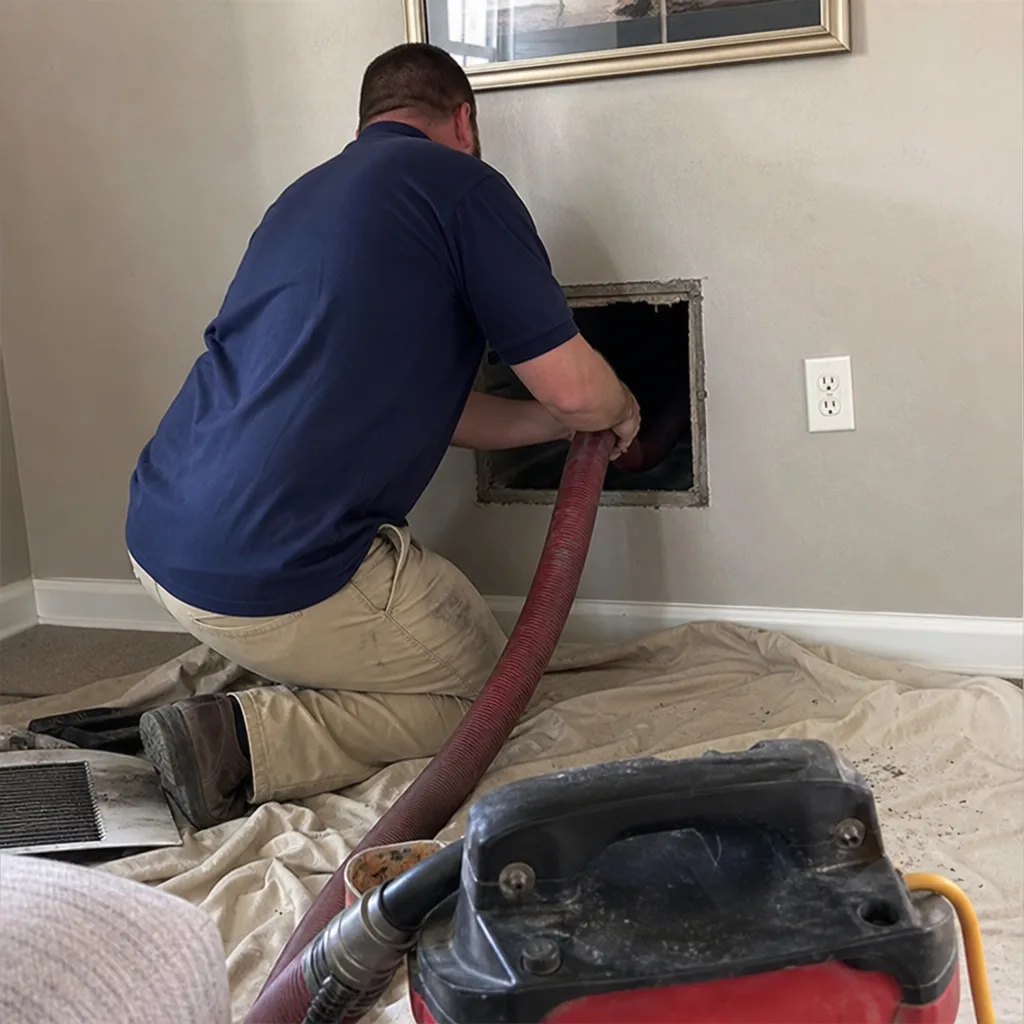
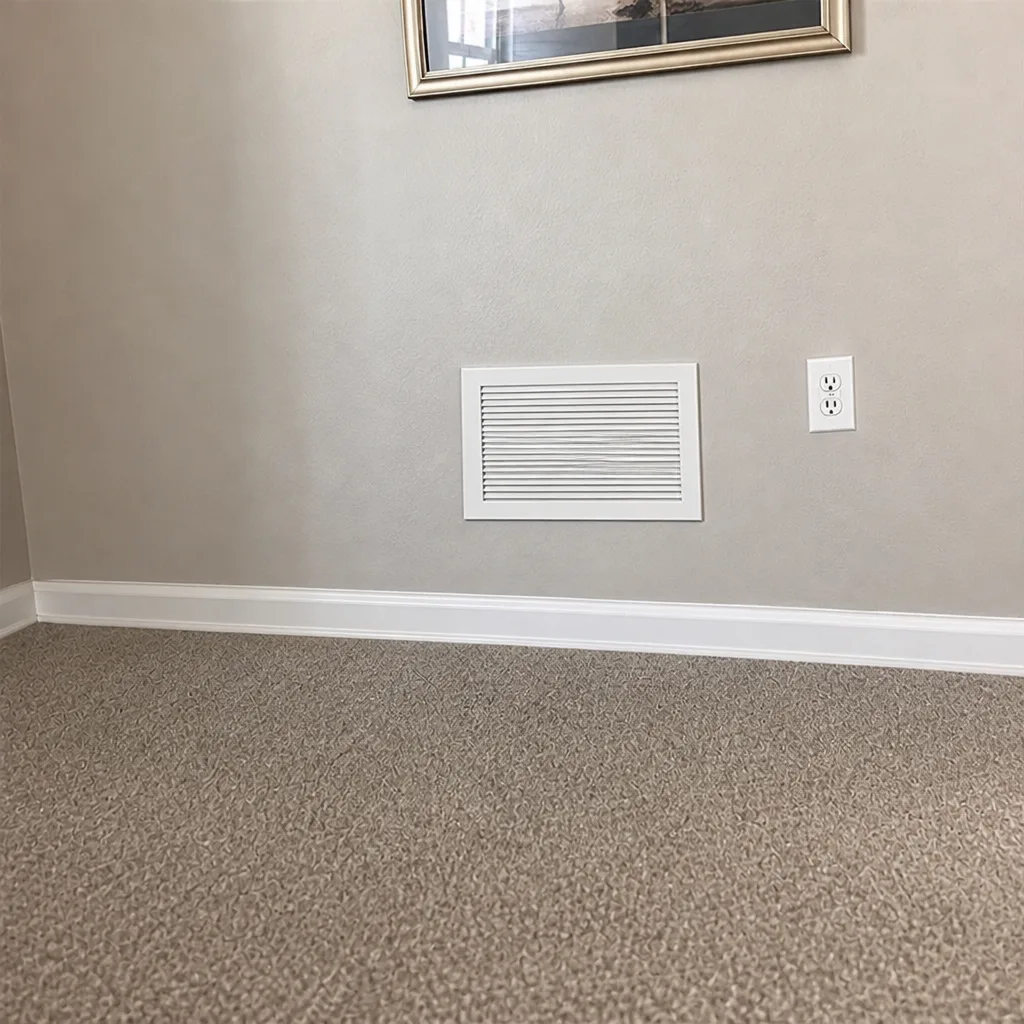
Whole-system duct and dryer vent check with before-and-after photos - you see exactly what came out of your vents
That "$99 whole-house special" is a bait ad - the real number appears once they are in your hallway, or the "clean" is a shop-vac at the register. We photograph the inside of your ducts before and after instead.
Air Duct Cleaning Warning Signs: A Tallahassee Homeowner’s Reference Guide
By the time you can visibly see debris blowing from a supply register, your duct system has likely been accumulating that contamination for two or more years. The useful warning signs appear much earlier and in places most homeowners aren’t looking. This guide is built to change that. It covers how to inspect your own grilles and vents with a flashlight and your phone camera, which Tallahassee-specific events should trigger an inspection no matter where you are on a cleaning schedule, how to tell normal register dust from the early signs of a real problem, what a musty smell on system startup is actually telling you, and how to log and timestamp what you find so you walk into a cleaning appointment with evidence and a baseline for comparison afterward.
Quick Answer
The most reliable early warning signs of dirty air ducts are dust building up inside the duct collar rather than on the register face, a musty smell in the first minutes of system startup, visible dark streaks or staining on the supply grilles, and a documented uptick in dust on horizontal surfaces after nearby construction or attic work. A single sign is worth watching; two or more logged over a few weeks is worth a professional evaluation. In Tallahassee’s long, humid cooling season, these signs tend to develop faster than in drier climates, which is why spot-checking your system before and after the wet months matters more here.
Styles & brands we work with
- Whole-home duct cleaning
- Dryer vent cleaning
- Camera inspection
- Sanitizing & deodorizing
Table of Contents
- Dust on the Register Face vs. Dust Inside the Duct Collar
- How to Inspect Your Own Grilles and Vents with a Flashlight and Phone
- Tallahassee Triggers: When to Inspect Regardless of Your Schedule
- What a Musty Odor on System Startup Really Means
- How to Log and Timestamp Warning Signs So They Count
- Early Signs vs. Late Signs: What Changes Over Time
- What a Professional Evaluation Actually Looks Like
- Common Mistakes to Avoid
Dust on the Register Face vs. Dust Inside the Duct Collar
Dust on the face of a supply register is normal and almost never a sign you need duct cleaning. Dust inside the duct collar, the short metal or flex sleeve the register sits in, is a different matter and is worth evaluating. The distinction matters because the first is the cumulative result of ordinary household air passing a surface; the second means material is settling on the interior surfaces of the duct system itself, where it accumulates and re-enters your living space.
Here’s how to tell them apart. The register face is the cover you see when you look at your wall or ceiling; it catches airborne dust like any flat surface in your home. The collar is the short passage just behind that cover, visible when you lift the register off. To check the difference:
- Look at the face first. A thin, even gray film across the louvers is expected and can be wiped clean.
- Remove the register cover carefully (most are held by two screws or friction clips) and look at the inside surface of the collar.
- Run your finger along the interior wall of the collar near the opening. A dry, light film is a soft sign. A visible dark layer or a mat of fuzzy material is a clearer one.
- Look for staining or streaking on the register face itself. Bright streaks under a supply that appear only during the cooling season point to condensation wetting dust into the surface, which is common in Tallahassee’s humid months and deserves a closer look.
- Check the return grille separately. Returns draw in dust faster than supplies push it out, so a dark, matted filter-mesh behind the return grille is one of the earliest signs a system is loading up.
The register face is cosmetic. The collar is diagnostic. Once you know which is which, a two-minute walk around the house gives you more information than most homeowners have ever gathered about their own ductwork.
How to Inspect Your Own Grilles and Vents with a Flashlight and Phone
You don’t have to remove ductwork or reach inside to get a useful first look. A flashlight and the camera on your phone can tell you a lot about early-stage buildup from outside the system. This is a look-only inspection: you’re photographing and observing, not cleaning or reaching into the ducts.
- Pick the right moment. Do this with the system off so dust isn’t blowing, and again a minute after the system turns on to capture what dislodges.
- Start at the return grille. Remove the filter, glance at the filter’s face, and photograph it against a neutral background so dirt loading is comparable over time.
- Use the flashlight at an angle. Shine it across the inside of the collar, not straight in. Angled light reveals surface texture that flat light hides.
- Film a short clip with your phone. Ten to fifteen seconds into each collar is enough. Move slowly; a static frame of the interior surface is worth more than a shaky scan.
- Photograph the register face separately so you have a clean record of the normal cosmetic state for comparison.
- Note the room, the date, and the filter condition for each photo. We’ll come back to this when we talk about logging.
The photo trick works because phones are now sensitive enough to catch what a flashlight beam reveals but the eye glosses over. Interior duct surfaces that look ordinary in passing can show a clear fringe of dark deposit in a still frame. If a photo shows a visible layer inside more than one collar, or the same pattern in several rooms, that’s the kind of evidence worth bringing to a professional evaluation. Our technicians have up to 9 years of experience reading exactly these signs, and a set of your own photos speeds up that conversation.
Tallahassee Triggers: When to Inspect Regardless of Your Schedule
Most homeowners think about duct cleaning on a calendar. In Tallahassee, events are a better trigger than the calendar. Certain local conditions push contamination into a duct system faster than a typical cleaning cycle assumes, and those are the moments an inspection is worth doing whether or not you’re “due.”
The triggers that matter most here:
- New construction nearby. Tallahassee has grown steadily, and grading, slab work, and framing send fine dust into the surrounding air for months. A home within sight of an active build should have its returns checked during and just after the build.
- Roof or attic work on your own home. Any roof replacement, attic insulation job, or ceiling repair in an attic that shares space with duct runs can dump insulation fibers and dust into the system. Inspect within a couple of weeks of the work finishing.
- Water events during the wet season. Tallahassee’s summer storms are heavy. If water gets into an attic, a crawlspace, or a wall cavity near duct runs, the ducts can absorb moisture and become a place where biological growth starts. This is the strongest trigger on the list.
- A renovation with the system running. Drywall dust, sanding, and demolition debris get pulled into returns when a system runs during remodeling. If the system stayed on, inspect the returns right after.
- A new-to-you home. You don’t know the prior owner’s schedule. Before your first cooling season, do the flashlight inspection on the returns so you have a starting point.
- The start of the cooling season. Tallahassee’s long warm season means the system runs more months than in most of the country, so buildup gets more hours of airflow per year to accumulate. Inspect once as the season begins.
None of these triggers alone means you need a full cleaning. But each one raises the odds that early-stage buildup has crossed into the range where a professional look is worthwhile. That’s the whole point of trigger-based inspection: it lets you catch a problem while it’s still small.
What a Musty Odor on System Startup Really Means
A musty smell in the first few minutes the system runs is one of the most common complaints we hear, and it’s also one of the most misunderstood. That first-blast odor is not always a duct problem, and knowing which problem you’re dealing with changes what the fix looks like.
Two very different conditions produce a similar smell:
- Duct liner condition. Many duct systems have an interior liner, a soft material bonded inside the metal. When that liner absorbs moisture and stays damp, it can develop a musty smell that comes through every time air moves past it. In a humid climate like Tallahassee’s, liner moisture is a real possibility and it’s a duct-side issue: cleaning and, where damaged, repair are the relevant responses.
- Coil condition. The evaporator coil sits in the air handler and stays wet during cooling season. A coil with biological growth or a clogged drain pan can produce a smell that mimics a duct problem. This is an HVAC component, not a duct problem, and it’s outside the scope of duct cleaning. We flag it because a homeowner who cleans their ducts and still smells mustiness usually has a coil issue that needs an HVAC technician.
So a musty smell on startup tells you something is wet and organic is growing where air passes. It doesn’t tell you which side of the air handler the problem is on. The right next step is an evaluation that checks both: the interior duct surfaces and the coil. If the answer is the coil, we’ll tell you plainly and point you toward the right trade. If it’s the duct liner, that’s work we do, and it’s better handled early than after the liner has degraded further.
How to Log and Timestamp Warning Signs So They Count
A photo of a dusty vent means little on its own. A dated set of photos compared against a later set is documentation, and documentation is what turns an observation into a decision. Logging your signs has two payoffs: you walk into a cleaning appointment with clear evidence, and you have a baseline to compare against after the work is done.
A simple four-step method works well:
- Photograph with the date and time visible. Most phone cameras stamp photos automatically. If yours doesn’t, name the file with the date and room (for example, “return-hallway-0712”).
- Record the same locations each time. The same return grille, the same supply collar, the same room. Consistency is what makes comparison possible.
- Write one line per photo: the room, what you saw, and whether the system was on or off. “Guest bedroom supply collar – dark fringe, system off, 07/12” is enough.
- Repeat at the same intervals. Once before the cooling season and once after the wet months gives you two comparable data points a year.
When you eventually call for an evaluation, those logs do three things. They show the professional where the strongest signs are, so the inspection is faster and more targeted. They give you a before photo to hold up against an after photo, which is how you verify the work was actually done rather than taken on faith. And they give you a genuine baseline: over the next year, you can compare the current state to the documented starting state and see whether buildup is returning faster or slower than expected.
This is the habit most homeowners skip, and it’s the one that pays off most. It’s also where the difference between a proactive owner and a reactive one shows. A dated log beats a memory every time.
Early Signs vs. Late Signs: What Changes Over Time
Most published warning-sign lists describe the late-stage symptoms: visible debris blowing from a register, a strong odor throughout the house, a system that visibly struggles. Those are real signs, but by the time they appear the contamination has been building for years. The early signs are quieter and easy to miss, which is exactly why they’re worth knowing.
Early signs (worth watching, easy to miss):
- A dark film or fringe visible only inside the return collar, not on the face.
- A thin layer of dust reappearing on horizontal surfaces like a shelf or a dresser top faster than it used to.
- A brief musty note in the first minute of system startup, gone by the time the system has run a few minutes.
- A filter that loads noticeably faster than the last several changes.
- A faint smell change after a nearby construction or attic project.
Late signs (call now, don’t wait):
- Visible debris or dark flecks blowing from a supply register.
- A persistent musty or stale smell that doesn’t clear after the system runs.
- Visibly sagging or disconnected flexible duct, which is an air duct cleaning and duct repair situation at once.
- Noticeable staining or water marks around a register or on the ceiling near a duct run.
- An increase in allergy-type symptoms among household members that correlates with the cooling season.
The gap between “the collar looks a little dark” and “debris is blowing out of a register” is usually two or more years of running the system with contamination building. Catching the collar sign early is the whole reason this guide focuses there. It’s the difference between an evaluation and a remediation project.
What a Professional Evaluation Actually Looks Like
If your own inspection turns up signs worth acting on, it helps to know what a professional evaluation involves so you can tell a thorough job from a superficial one before anyone enters your home. The equipment matters. The difference between a thorough cleaning and a superficial one is the equipment.
At Hillcrest Air Duct Cleaning, our evaluation and cleaning process is built around professional tools, not consumer gear:
- Rotobrush and Nikro systems – purpose-built duct cleaning equipment designed for the inside of ductwork. These are not repurposed shop vacs; they agitate and extract from the duct surface in a controlled way.
- Abatement Technologies containment and extraction – equipment that contains and captures contaminants, dust, and particulate as it’s dislodged rather than letting it drift back into the room. This is where genuine containment separates a real job from a quick pass.
- Honeywell and Aprilaire system awareness – we work with these air-quality brands, which means we understand your whole-home air system, not just the ducts in isolation.
- Guardsman products – a brand we’re trained on for duct and vent work.
A proper evaluation also means honest scoping. Duct cleaning is not the answer to every symptom, and we say so: a musty smell from a wet coil isn’t duct cleaning work, and a disconnected flex duct that’s leaking conditioned air isn’t a cleaning issue, it’s a repair. Our three services are air duct cleaning, air duct repair, and dryer vent cleaning, and each one addresses a different problem. When a job calls for one of these, we price it as one flat price per system, agreed before work starts. No per-vent pricing. No surprise invoice after the fact. That’s the standard we hold ourselves to for every Tallahassee homeowner, and it’s a large part of why the customers we work with tend to be the ones who asked hard questions first.
Before-and-after photos of your own ducts come with every job, so you can verify the work rather than take it on faith. That’s the documentation habit from the logging section, completed by the professional side.
Common Mistakes to Avoid
- Judging only by the register face. The face is cosmetic; the collar is diagnostic. A clean register face says nothing about what’s inside the duct, so lift the cover and look behind it before deciding anything.
- Skipping the inspection after roof or attic work. Every roof replacement and attic insulation job in Tallahassee sends fibers and dust into the system if it stayed on. Inspect within weeks, not months, while early buildup is still early.
- Assuming a musty smell is always the ducts. A wet coil produces a similar smell and needs an HVAC technician, not a duct cleaner. If a cleaning didn’t clear the smell, the coil is the next place to look.
- Waiting for visible debris. By the time debris is blowing, the system has likely been accumulating contamination for two years or more. The whole point of this guide is to catch the signs before that threshold.
- Choosing a cleaner on price alone. A very low quote usually means consumer-grade tools, no containment, and per-vent pricing that grows once work starts. Ask what equipment they use and whether the price is flat per system, agreed in writing before work begins.
- Not documenting anything. An undated memory can’t be compared to a post-cleaning photo. A dated log is what turns “it seems dusty” into a decision you can trust.
- Ignoring the dryer vent. Dryer vent buildup is a leading cause of house fires. While you’re inspecting ducts, check the dryer vent run for lint buildup; we handle that too.
See the difference
 Before
 After
 Before
 After
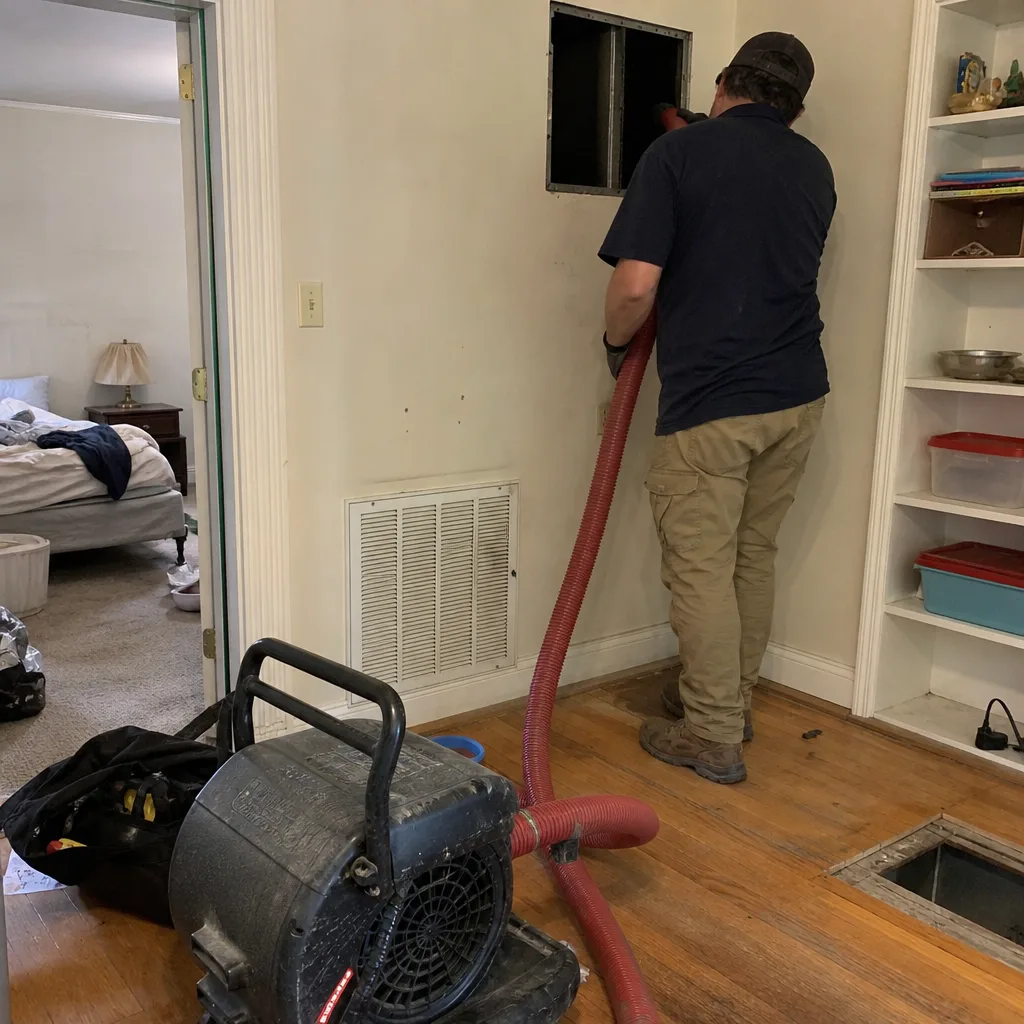 Before
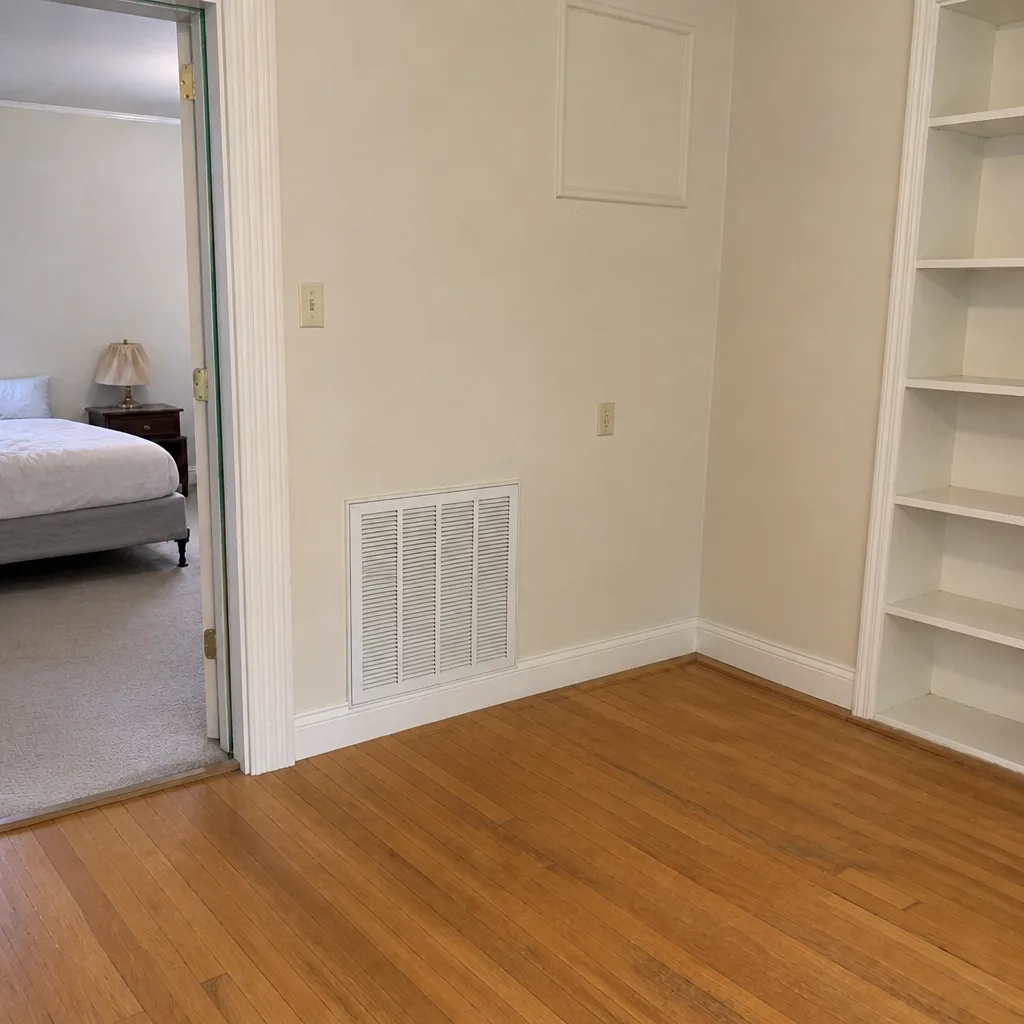 After
When to Call a Professional
Some signs stay in the “keep an eye on it” column. Others mean it’s time to call. A dark layer visible inside more than one return or supply collar, a musty smell in the first minutes of startup, visible debris blowing from a register, a recently finished roof or attic job you want inspected, a water event that reached ducts in the attic or a wall cavity, or any household member whose symptoms line up with the cooling season. If any of these describes your home, a professional evaluation is the reasonable next step, and the earlier the better. Hillcrest Air Duct Cleaning offers free estimates in Tallahassee – call (888) 721-9610. We answer 24/7. Fast dispatch from 7am to 7pm, Sunday through Friday. Our technicians have up to 9 years of experience, and we use Rotobrush, Nikro, and Abatement Technologies equipment on every job so you know exactly what’s coming into your home.
Frequently Asked Questions
Your air ducts likely need an evaluation if you can see a dark layer inside a return or supply collar, smell a musty odor in the first minutes the system runs, or see visible debris blowing from a register. One early sign is worth watching; two or more logged over a few weeks is worth a professional look. Dust on the register face alone is normal and doesn’t count. When in doubt, a free estimate from Hillcrest Air Duct Cleaning sorts it out: call (888) 721-9610. We answer 24/7.
Air duct cleaning in Tallahassee is priced as one flat price per system agreed before work starts, so the number depends on the size and configuration of your duct system rather than a per-vent count. That’s the honest answer: a whole-system price set by a written estimate is more reliable than any teaser quote, and a low coupon figure usually turns into a larger invoice once the technician is on site. Ask exactly what the flat price covers and what equipment is used. Call (888) 721-9610 for a free estimate. We answer 24/7.
A musty smell in the first minute or two of operation is common but not normal: it means something organic is wet where air passes, either inside a duct liner or on the evaporator coil. Duct liner moisture is a duct issue we address; coil growth is an HVAC issue that needs a technician. A professional evaluation checks both, so you know which one you’re dealing with before you spend anything. Call (888) 721-9610 for a free estimate. We answer 24/7, with fast dispatch from 7am to 7pm, Sunday through Friday.
Inspect your ducts at least twice a year in Tallahassee: once before the cooling season starts and once after the wet summer months. The long humid cooling season means the system runs more hours per year here than in drier climates, giving contamination more time to accumulate, and the wet season is when moisture problems start. Those two spot-checks give you a comparable baseline to work from. Call (888) 721-9610 if a spot-check turns up signs worth evaluating. We answer 24/7.
Cheap duct cleaning quotes are usually cheap because they use consumer-grade vacuums, skip proper containment, or advertise a per-vent price that grows once the technician sees the job. A thorough job uses professional equipment such as Rotobrush and Nikro systems with Abatement Technologies containment, prices the whole system as one flat price agreed in writing, and provides before-and-after photos of your own ducts so you can confirm the work was done. Ask any company which equipment it uses and whether the price is flat per system before you book. Call (888) 721-9610 for a free estimate from Hillcrest Air Duct Cleaning. We answer 24/7.
Contaminated ductwork is often connected to seasonal allergy-type symptoms that track with the cooling season, though the connection varies from home to home and cleaning isn’t a medical fix. The practical reason to test your system is the visual inspection: if the collars show real accumulation and a household member is symptomatic during cooling season, that’s a reasonable moment to have the system evaluated. Call (888) 721-9610 to book a free estimate. We answer 24/7, with fast dispatch from 7am to 7pm, Sunday through Friday.
The Bottom Line
The useful warning signs of a duct problem are quieter than the late-stage symptoms most lists describe: a dark fringe inside the return collar, a musty note on startup, a filter that loads faster than it used to, a smell change after nearby construction or roof work. Inspect with a flashlight and your phone, log what you find with dates so you have a baseline, and use Tallahassee’s local triggers (new construction, attic work, wet-season water events) to decide when to look regardless of the calendar. When two or more early signs stack up, a professional evaluation is the right next step. Hillcrest Air Duct Cleaning offers free estimates in Tallahassee – call (888) 721-9610. We answer 24/7. Fast dispatch from 7am to 7pm, Sunday through Friday. One flat price per system agreed before work starts, and before-and-after photos of your own ducts so you know the work was actually done.
Written by the team at Hillcrest Air Duct Cleaning.