
Last updated November 16, 2026
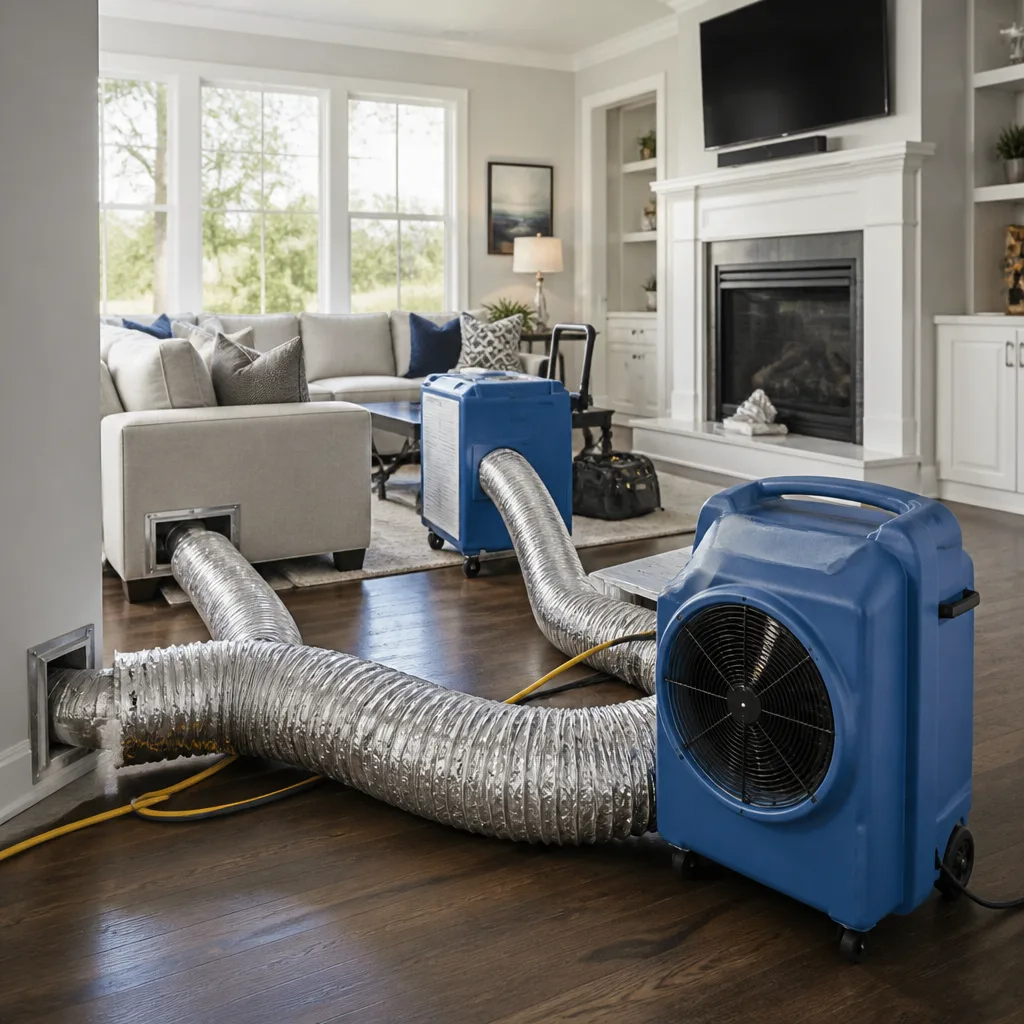 Whole-home duct cleaning
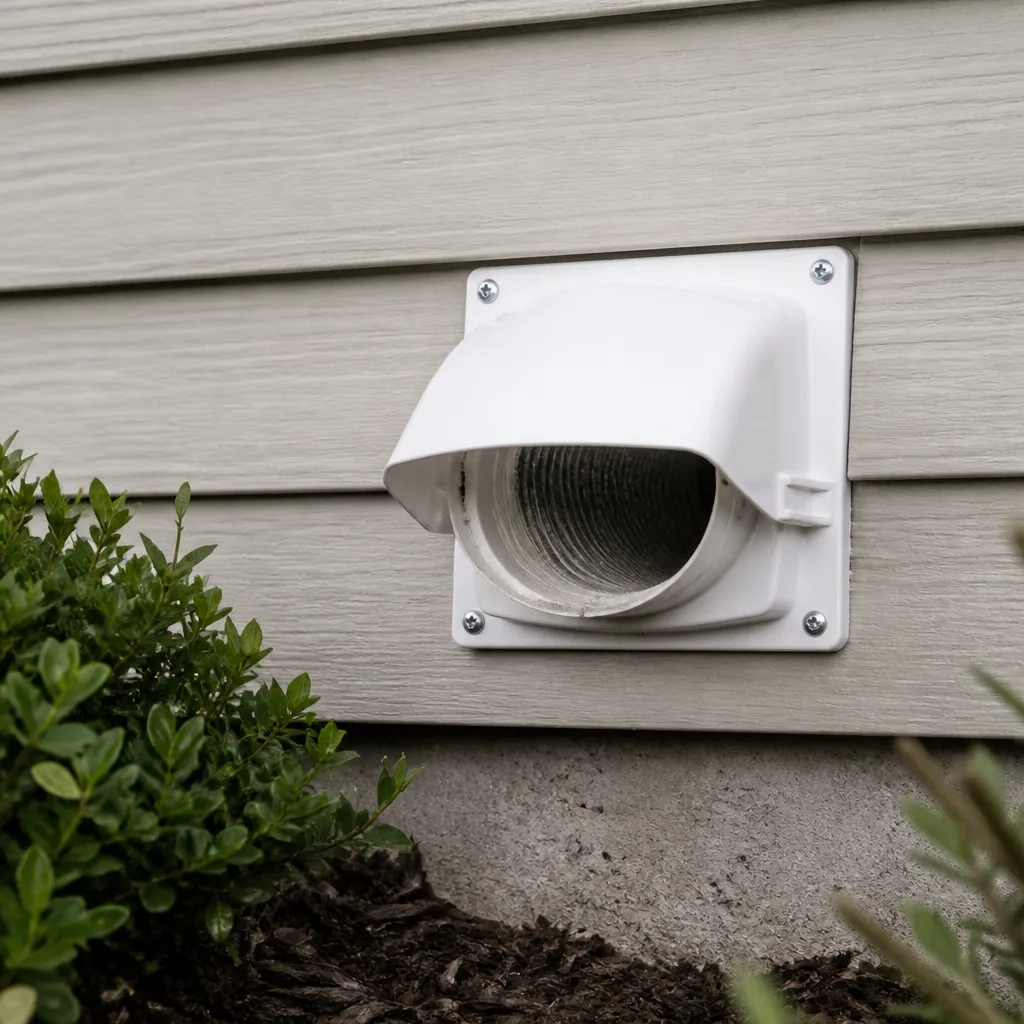 Dryer vent cleaning
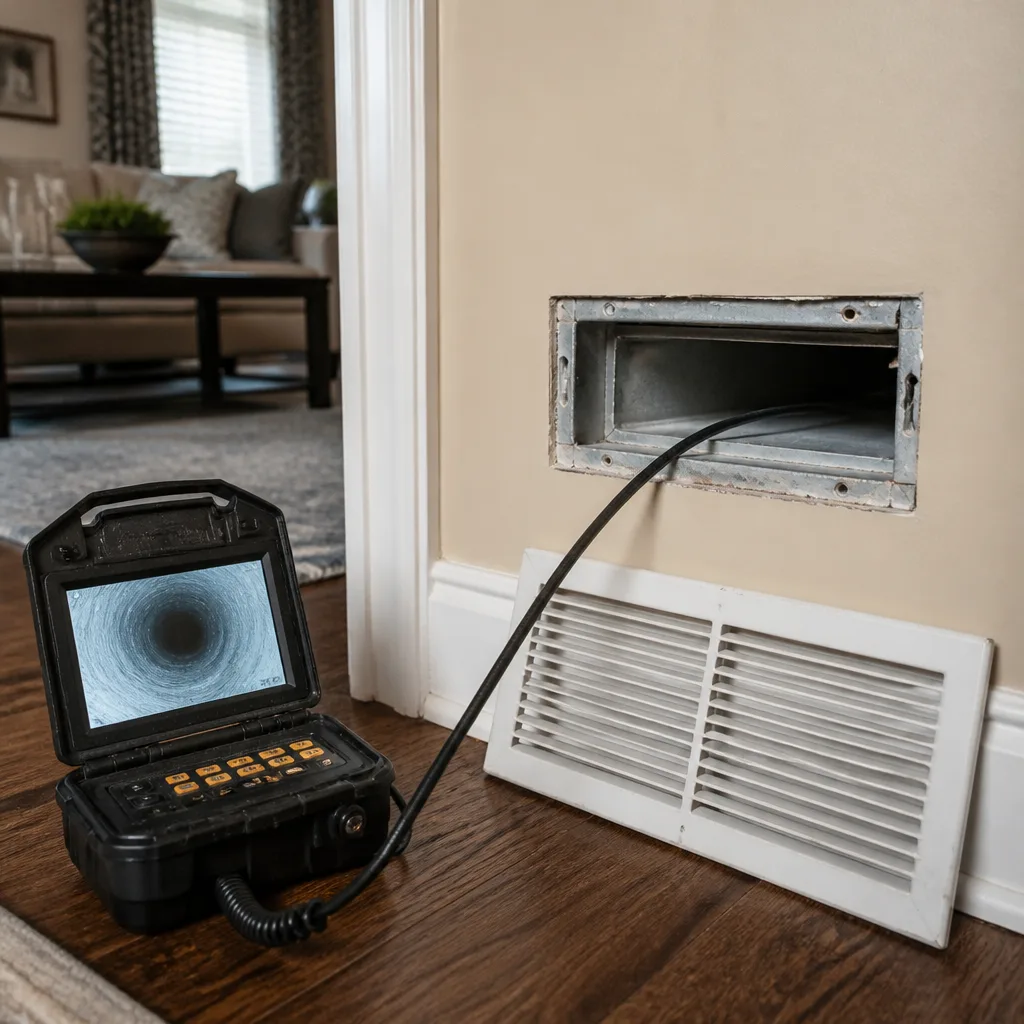 Camera inspection
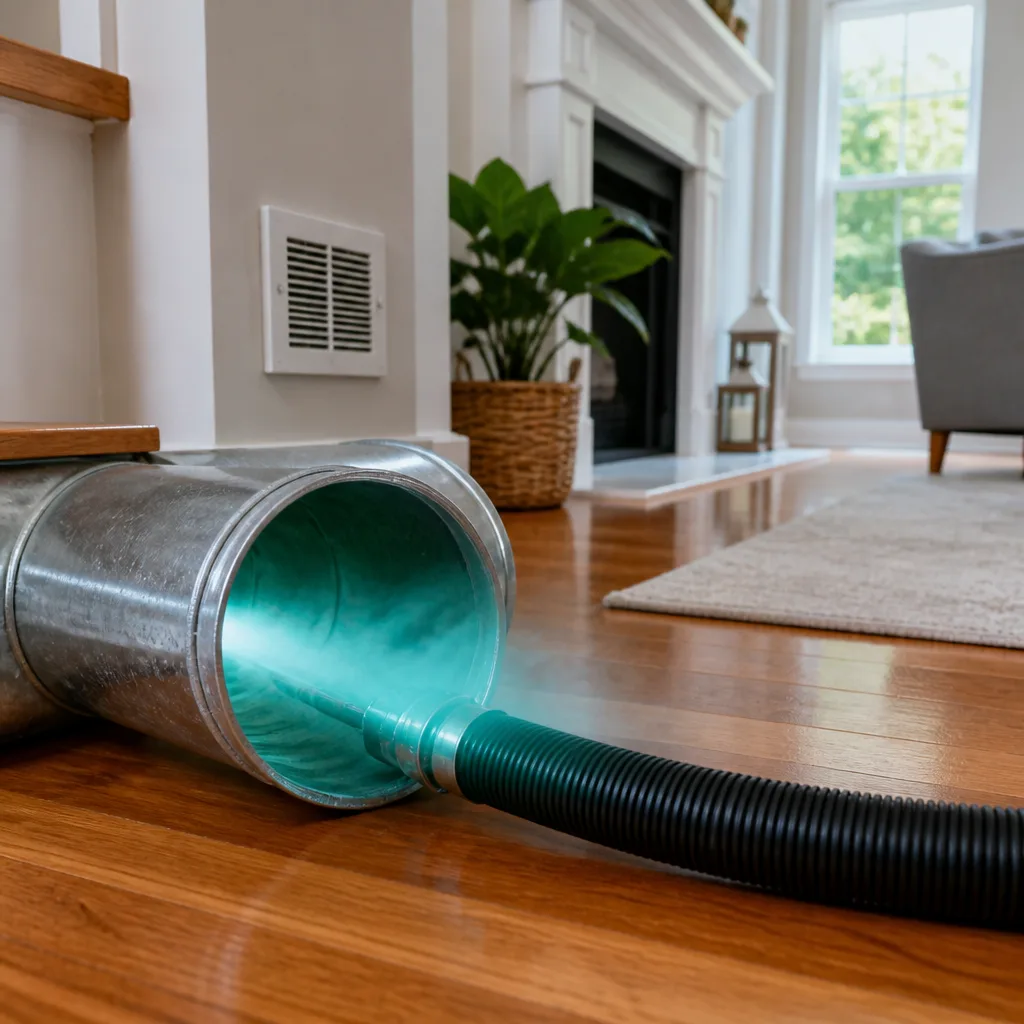 Sanitizing & deodorizing
Whole-system duct and dryer vent check with before-and-after photos - you see exactly what came out of your vents
That "$99 whole-house special" is a bait ad - the real number appears once they are in your hallway, or the "clean" is a shop-vac at the register. We photograph the inside of your ducts before and after instead.
Air Duct Cleaning Emergency Preparedness Guide for Tallahassee Homes
Most homeowners treat duct cleaning as routine maintenance, something to schedule eventually. In Tallahassee, that assumption breaks down the moment a tropical system pushes through. The misunderstanding is this: the danger after a storm isn’t only the water you can see in a hallway or the shingles missing from a roof edge. It’s what gets pulled into your air handler and pushed into every room before anyone notices a problem. Run the system after an attic breach without checking the ductwork first, and you can move mold spores and contaminated dust through the whole house in a matter of hours. This guide explains what to inspect, when to keep the system off, how to document damage for an insurance claim, and how to prep your ductwork before the next storm season. We’re writing it as a duct-and-vent specialist serving Tallahassee, because what we see after storms differs from routine cleaning calls.
Quick Answer
After a storm event in Tallahassee, keep your HVAC system off until the ductwork and air handler have been inspected, especially if your attic was breached, insulation got wet, or standing water came near the equipment. A duct system that took on moisture or debris needs a post-storm cleaning and often duct repair before it can run safely. Pre-storm, the priority is sealing attic penetrations, protecting return air paths, and upgrading return filters so debris can’t find an easy way in.
Styles & brands we work with
- Whole-home duct cleaning
- Dryer vent cleaning
- Camera inspection
- Sanitizing & deodorizing
Table of Contents
- The Post-Storm Protocol: What to Do in the First 48 Hours
- How to Tell If Moisture Reached Your Duct Insulation
- Tallahassee’s Tree Canopy and Duct Contamination Risk
- Insurance Documentation: What a Duct Inspection Report Should Include
- Pre-Storm Prep: Steps Before the Season Starts
- Why Equipment Matters After a Storm Event
- When Cleaning Is the Wrong Answer
The Post-Storm Protocol: What to Do in the First 48 Hours
The first two days after a storm event are when bad decisions happen. People want the house back to normal, so they flip the thermostat on and hope for the best. Here’s a protocol that holds up whether a contractor is already on the property or you’re waiting your turn.
- Turn the system off at the thermostat. Not to fan-only, not to heat, not to cool. Off. If you aren’t sure how to do that, switch the breaker at the air handler.
- Check the air handler closet or platform. Look for standing water, soaked insulation wrap, or visible condensation on the cabinet. If water is present, leave the system off and photograph everything.
- Look up into the attic from the access panel. Any daylight through the roof, torn vent covers, or displaced insulation means debris likely entered the return path. Don’t run the system.
- Inspect supply vents and return grilles. Loose grilles, dust plumes when you shine a flashlight, or visible debris in the boots signal contamination.
- Smell for it. A musty or earthy smell near vents is one of the most reliable indicators that moisture reached duct insulation or the liner. Trust it.
- Document before you clean. Take wide and close photos with timestamps of attic penetrations, water lines, duct insulation, and your thermostat. Insurance adjusters want timestamps and framing, not just close-ups.
- Call for an inspection before restart. A duct specialist can scope the system and tell you whether cleaning is enough or whether repair or partial replacement of ductwork is needed.
If you need to restart before an inspection is done, at least run the fan with no heating or cooling for a few minutes on a cool day and stand near a return. If debris is blowing, shut it off again. In our experience, the calls we regret most are the ones that came a week too late. Call (888) 721-9610 and we’ll dispatch fast dispatch from 7am to 7pm, Sunday through Friday, to look at the system before it goes back on. We answer 24/7.
How to Tell If Moisture Reached Your Duct Insulation
Duct insulation is quieter about getting wet than a soggy ceiling tile. Flexible duct in a Tallahassee attic runs through heat and humidity most of the year, and once water enters the outer jacket or the inner liner, it doesn’t dry out quickly in an unconditioned space. Here’s how to make the call.
- Feel the jacket. On flex duct, run a gloved hand along the outside. Any softness, dampness, or dark discoloration suggests water got inside the insulation.
- Look at the liner. A foil or plastic inner liner that sags, wrinkles, or separates from the insulation has likely been wet.
- Check seams and joints. Water wicks along seams and collects at joints and duct boots. If you see water staining along a seam, assume the section is compromised.
- Smell the supply registers. A musty or earthy odor when air moves through, or after the system runs briefly, means moisture is present in the duct system.
- Look for condensation drip marks. Water rings on attic decking or insulation below a duct run tell you where it happened, even if the duct seems dry now.
- Check the crawl space. In a crawl space system, look for damp insulation blanket, rust on hangars and straps, and sagging duct runs.
Wet insulation doesn’t always mean the whole system is a loss. Sometimes a single run is affected, and a targeted repair plus a full cleaning restores the system. But if the liner or insulation jacket is wet and hasn’t dried within a day or two, that section should be replaced rather than dried in place, since mold growth in duct insulation is difficult to remove. In Tallahassee’s humidity, that two-day window is not generous. Call (888) 721-9610 for an inspection before you decide the system is fine. Estimates are free.
Tallahassee’s Tree Canopy and Duct Contamination Risk
Tallahassee’s canopy is one of the reasons people love living here, but it’s also why storm cleanup tends to involve more than roofing. Wind-blown leaf litter, bark, and fine debris are pushed into gaps most homeowners never look at: displaced roof vents, ridge vents, soffit vents, and the return air plenum above the air handler. When the vent cover is sitting crooked or a cap is missing, the attic becomes a debris funnel.
What that means for ductwork is straightforward. Your return air plenum and the attic-side duct boots sit close to these penetrations. If debris enters the attic, the return side of the system is the first place contamination lands. From there, the blower can pull it into supply runs and distribute fine particulate into bedrooms, kitchens, and living rooms.
Areas near the older tree-canopied neighborhoods of Tallahassee, places like Betton Hills, Myers Park, and Indianhead, tend to see this more than newer subdivisions with fewer mature trees. Roofs that have seen numerous limbs fall over the years often have small vent penetrations that were never fully sealed, and a storm finds those quickly.
What to check after winds:
- Every roof vent, cap, and ridge cover – photograph anything displaced or missing.
- Soffit vents and gable vents for leaf and bark intrusion.
- The attic decking around return boots for debris patterns pointing downward.
- The return filter – a torn or loaded filter post-storm should be replaced.
- The air handler cabinet interior for visible debris.
If you find displaced vents, don’t run the system for heating or cooling until the vents are secured and the duct system has been checked. Call air duct cleaning for a post-storm assessment before your blower pushes that debris into living spaces.
Insurance Documentation: What a Duct Inspection Report Should Include
Duct damage after a storm is often the easiest part of a claim to dispute, which is why the documentation matters as much as the cleaning. Adjusters see ductwork as concealed, and they want evidence. A proper inspection report should leave no room for guesswork.
What to ask for in a duct inspection report:
- Photographs and video frame captures of each affected duct run, with labels for location (attic, crawl, wall, closet).
- Moisture readings for duct insulation, taken at multiple points, with the instrument used noted.
- An inventory of the sections recommended for cleaning versus repair versus replacement, each with reasoning.
- Details on any displaced or missing roof vents and attic penetrations found, with photos.
- Photos of the return plenum interior and air handler cabinet.
- A written scope of work with measurements and quantities, so repair scope can be priced.
- Timestamped before-and-after photos once the work is done – which is also the strongest proof of completion if the claim is reviewed later.
Keep your own set of photos and dates too. A phone full of timestamped images from the day after the storm supports a claim far better than a memory of what happened. If you’re ready to have the system looked at and documented, call (888) 721-9610. Estimates are free, and we provide before-and-after photos of your own ducts after the work is done.
Pre-Storm Prep: Steps Before the Season Starts
Preparing ductwork for storm season in Tallahassee means thinking like wind and water. You may not be able to stop a limb from falling, but you can make sure your duct system doesn’t become the pathway. Here’s what we recommend homeowners do before the season hits.
- Walk the attic and seal every roof penetration. Any gap around a vent pipe, boot, or roof cap should be sealed with proper flashing and sealant. Attic air should not connect directly to the outdoors.
- Check all roof vent covers and ridge caps. Secure loose or missing hardware now, before they become storm debris. Any vent you can push by hand is a vent you’ll lose in wind.
- Upgrade your return filter. A mid-efficiency pleated filter in a proper MERV range supports the whole system. Confirm your filter fits your return grille correctly with no bypass gaps around the edges.
- Add register covers where recommended. If you have rooms with floor registers near windows or doors, close or cover them during a storm to reduce debris intrusion.
- Check attic decking and insulation for pre-existing water damage. Old staining from a prior leak can be confused with new storm damage when filing a claim.
- Make sure the air handler closet is dry and clear. Move stored items off the platform and check that the cabinet is sealed at the seams.
- Schedule a pre-season cleaning if the ducts haven’t been serviced in a few years. A clean, well-sealed system handles post-storm inspection faster.
If your ducts haven’t been professionally inspected, this is also the moment to have that done. We work with Honeywell and Aprilaire air-quality components during pre-season checks and can note the current state of the system so it’s documented before any storm. Our technicians have up to 9 years of experience with duct and vent systems. Call (888) 721-9610 for a free estimate on a pre-season inspection in Tallahassee.
Why Equipment Matters After a Storm Event
Post-storm cleaning is not the same task as routine maintenance. Routine cleaning addresses buildup; post-storm cleaning addresses a mixed load of debris, moisture, and potentially mold-contaminated particulate. The equipment has to match that job, and most low-bid offers don’t.
We use Rotobrush and Nikro systems, which are purpose-built for duct interiors: rotary brushes and whips that reach into branch runs and plenum spaces, paired with high-volume negative pressure. That combination pulls the loosened material out of the system rather than pushing it deeper into the house. We also deploy Abatement Technologies equipment where containment matters, which it does in a post-storm situation with mold spores or disturbed insulation. Contaminant containment isn’t a phrase we toss around. It means the vacuum, filtration, and containment setup are designed to keep what comes out of your ducts from becoming airborne in your living space.
Then there’s the integration side. We work with Honeywell and Aprilaire systems, so when the discussion turns to filtration, humidistat control, or air-quality improvements after a storm, we understand how those pieces fit with the duct system. That’s the difference between a cleaning crew and a specialist who only does Hillcrest Air Duct Cleaning duct and vent work day in and out.
If you’ve gotten two quotes and one seems far cheaper, ask what equipment and containment they’re bringing. Call (888) 721-9610 if you’d like a transparent quote on post-storm work in Tallahassee. One flat price per system, agreed before work starts, and before-and-after photos when it’s done.
When Cleaning Is the Wrong Answer
Sometimes the honest recommendation is that cleaning alone won’t solve the problem. We tell homeowners this regularly, and it’s a better outcome for you than paying for a job that masks an issue. Cleaning is the wrong answer in a few situations.
- Wet duct insulation or liner that hasn’t fully dried. That section should be removed and replaced, not cleaned. Cleaning a wet liner doesn’t remove mold growth inside the insulation.
- Structurally damaged ductwork. Crushed, torn, or disconnected runs need duct repair before cleaning makes sense. Cleaning a system that leaks into the attic will only recontaminate it.
- Air handler cabinet water damage. If the cabinet itself has standing water or corrosion from a leak, that’s a repair scope, and often requires coordination with your HVAC contractor before duct work resumes.
- Mold growth visible inside the duct beyond what cleaning can remove. That’s a job for a mold remediation specialist working with a duct professional, and we’ll say so.
- Missing or displaced roof vents. Fix the penetration first. Otherwise the first rain will undo the cleanup.
The rule of thumb is this: clean the system, but fix the reason it got contaminated. Otherwise you’re paying for a repeat job. If you’re not sure which situation you’re in, call (888) 721-9610 for an inspection. It’s free.
Common Mistakes to Avoid
- Turning the HVAC back on to “dry things out.” A blower pulls air through the duct system and pushes it into every room. If the return plenum or attic-side ducts took on moisture or debris, you’ve just distributed it through the house. Leave the system off until the system is inspected.
- Trusting a low bid without asking what equipment shows up. If the quote doesn’t mention the equipment and containment system by name, ask. In Tallahassee, “same-day duct cleaning” offers that show up with a shop vac and a wand aren’t doing post-storm work – they’re surface-wiping.
- Skipping the moisture readings. Wet duct insulation doesn’t always look wet. If an inspection report doesn’t include moisture readings, the diagnosis is guesswork. Ask for the numbers.
- Filing an insurance claim without photos from day one. Timestamped photos taken immediately after the storm carry weight an adjuster will look at; a photo taken a week later is easily disputed. Document before you clean.
- Ignoring displaced roof vents because the roof itself looks fine. A vent cover sitting crooked lets wind-driven debris directly into the attic, and from there into the return path. It’s a small repair that prevents a much larger one.
- Cleaning without repairing the cause. A system with torn flex runs or disconnected boots will recontaminate itself in weeks. Repair is part of a complete job, not an upsell.
- Forgetting the dryer vent after storm season. Debris, lint, and moisture can all reach the dryer vent path during storms, and a clogged vent is a fire risk. Have it checked alongside the duct system – our dryer vent cleaning service covers it as part of the same visit.
See the difference
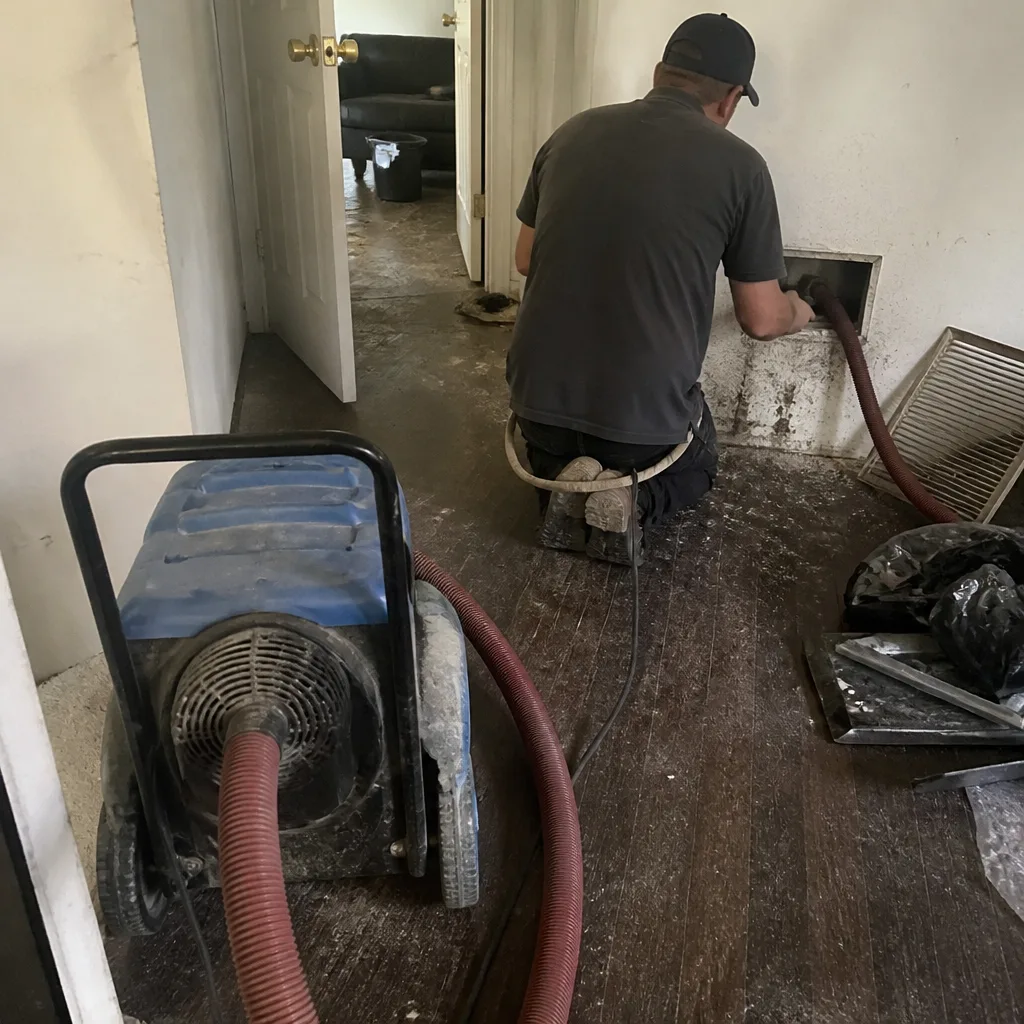 Before
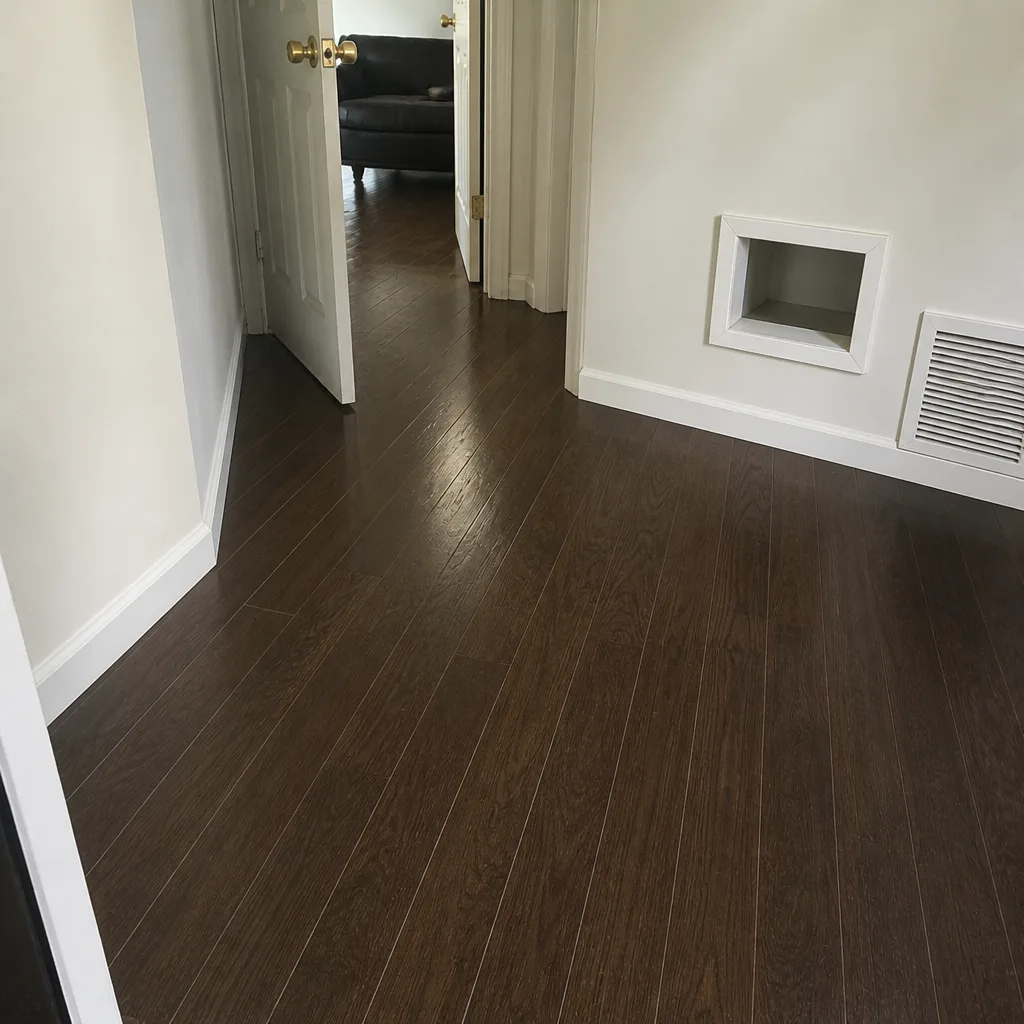 After
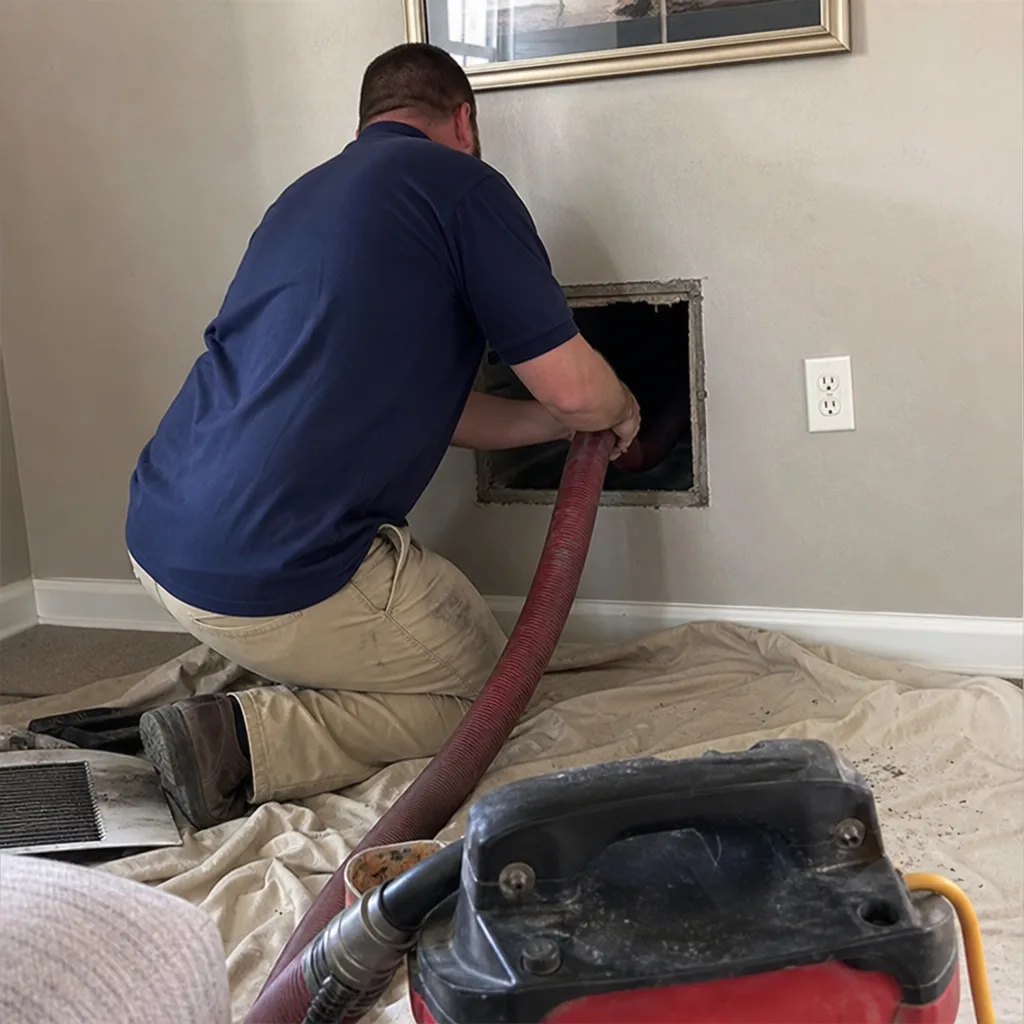 Before
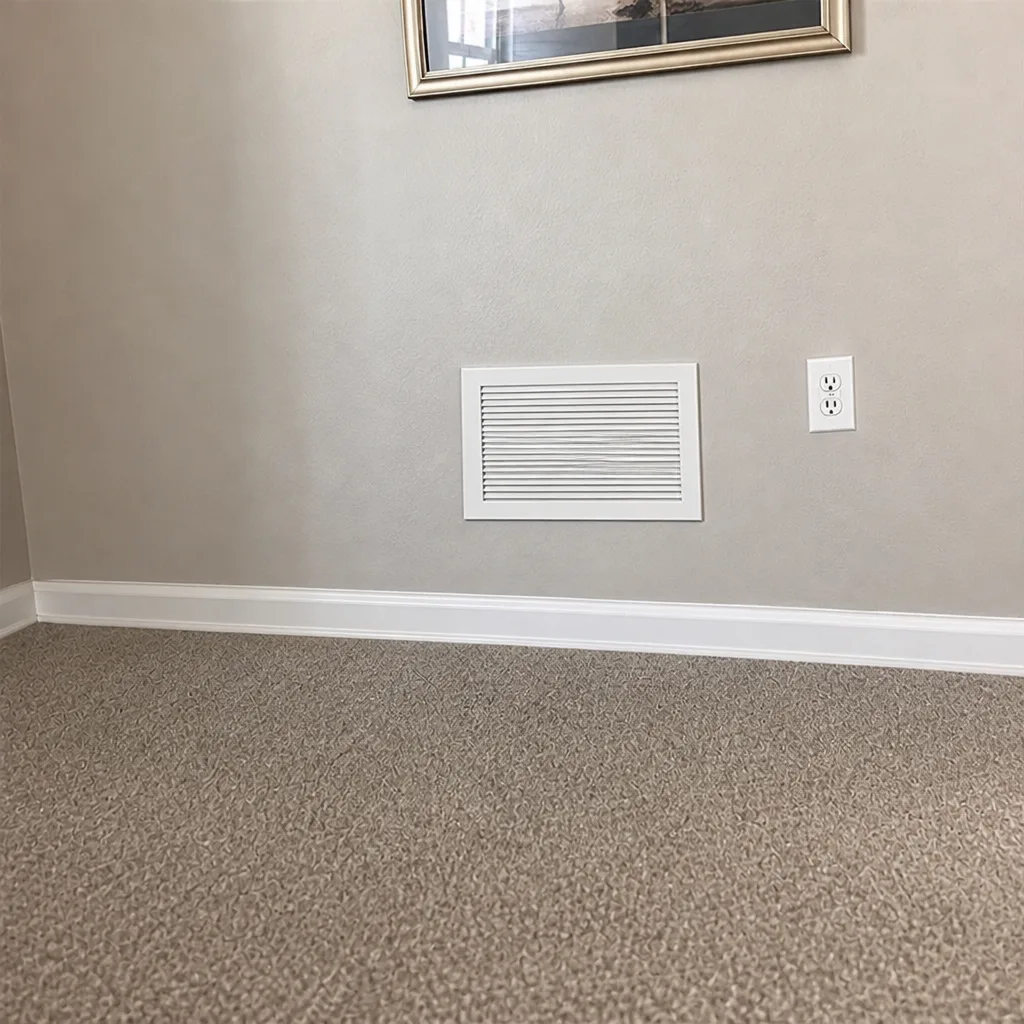 After
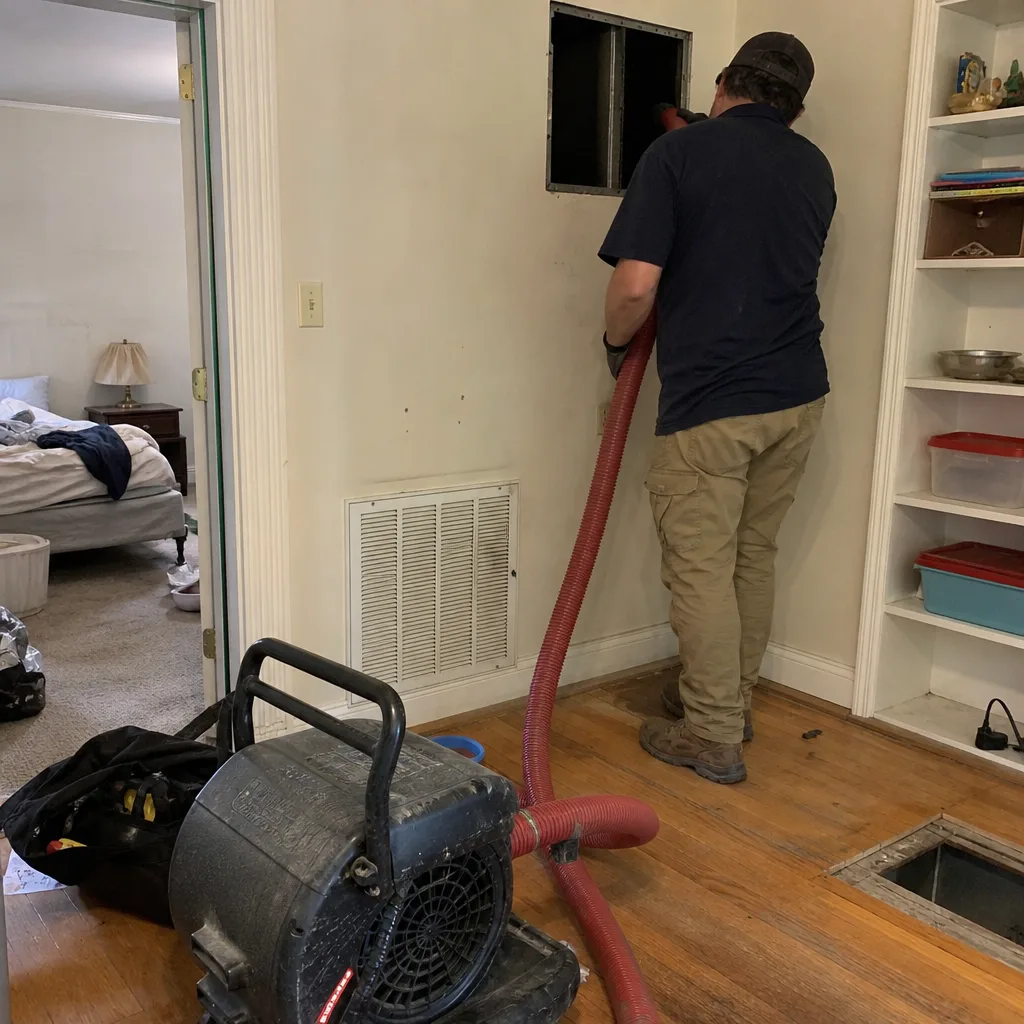 Before
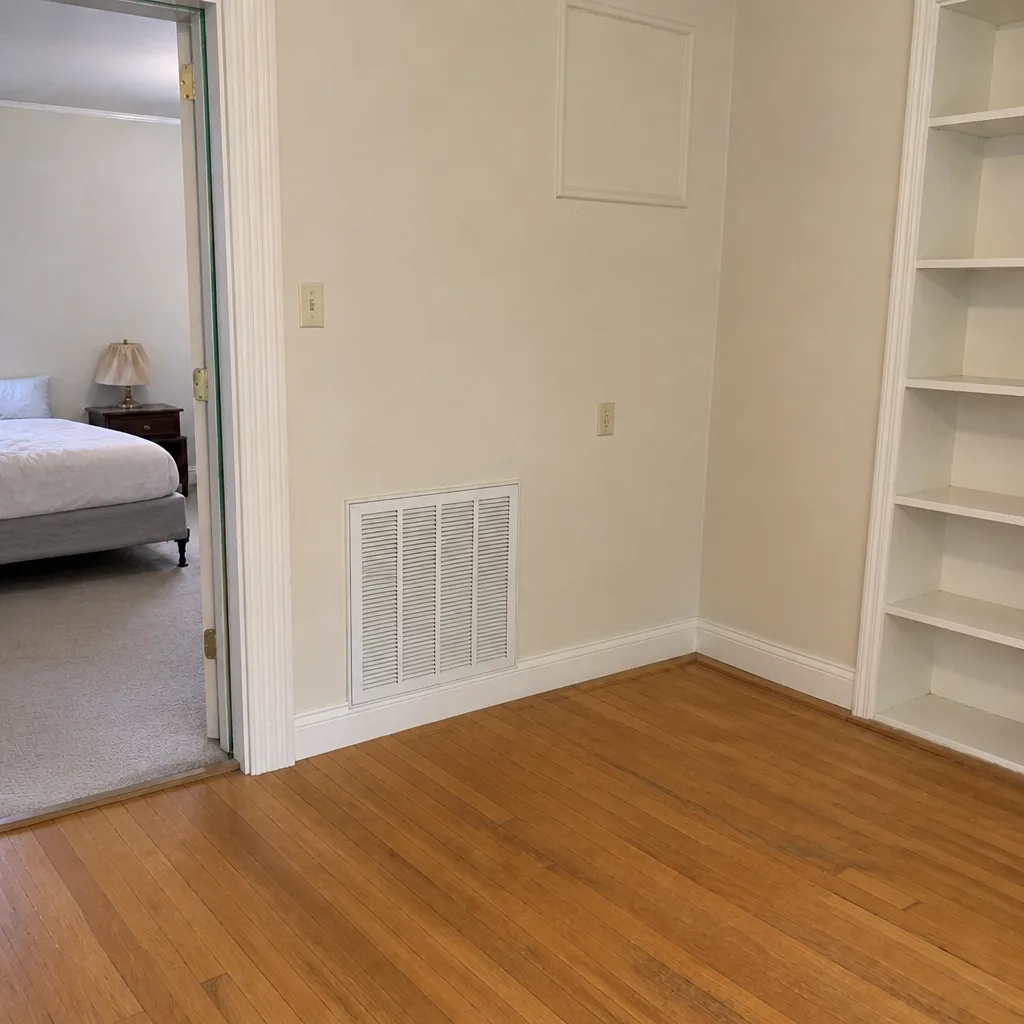 After
When to Call a Professional
Call a duct specialist after any storm that caused water intrusion, attic damage, or displaced roof vents, and don’t run the system until the ducts have been inspected. Call when you smell musty air near supplies, see debris blowing from a return, or find condensation or drip marks near a duct run. Call before filing an insurance claim that includes ductwork, so the inspection report captures what adjusters want. Call before storm season for a prep inspection if your ductwork hasn’t been looked at in a few years. Hillcrest Air Duct Cleaning offers free estimates in Tallahassee – call (888) 721-9610. We answer 24/7. Fast dispatch from 7am to 7pm, Sunday through Friday. One flat price per system, agreed before work starts, and before-and-after photos of your own ducts when we’re done.
Frequently Asked Questions
Not until the duct system and air handler have been checked. Even without standing water in the living space, an attic breach, displaced roof vent, or wet insulation wrap can push debris or moisture into the return path. Running the blower then distributes that contamination through every room. Keep the system off and get an inspection, then restart. Call (888) 721-9610 for a free estimate on a post-storm inspection in Tallahassee.
The reliable signs are a damp or discolored outer jacket on flex duct, a sagging or separated inner liner, condensation drip marks on attic decking, and a musty smell near supply registers. A flashlight and a gloved hand get you most of the way, but moisture readings from a professional inspection are what tell you whether a section can be dried or should be replaced. In Tallahassee’s humidity, wet duct insulation rarely dries on its own in an unconditioned attic. Call (888) 721-9610 to have moisture readings taken.
Coverage depends on your policy and on whether the ductwork damage is attributable to a covered storm event. What you control is the documentation: timestamped photos from day one, moisture readings, an itemized inspection report with photos and a written scope, and an inventory of duct sections recommended for cleaning versus repair versus replacement. An adjuster is far more likely to approve a claim supported by that file. If you’re about to file, call (888) 721-9610 and we’ll document the system before any cleaning takes place.
Post-storm duct cleaning in Tallahassee typically runs within our whole-system price range, and the written estimate sets the final number. Storm work differs from routine cleaning because the scope can include repair of damaged or disconnected runs, replacement of wet insulation sections, and additional containment. We don’t quote per-vent prices, and we don’t run a teaser price that changes once the technician is on site. Call (888) 721-9610 and we’ll give you a written estimate – it’s free – before any work begins.
Usually because a low quote covers less work, not because it’s a better price. After a storm, a real job includes equipment suitable for contaminant containment, inspection with documentation, and repair of anything that got damaged. Bait-and-switch pricing is a real problem in this trade: a teaser price that becomes a much larger invoice once the technician is in the attic. Ask what equipment the quote is for, ask for a written scope, and ask whether the price is per system or per vent. Call (888) 721-9610 for a flat price per system, agreed before work starts.
Most homes don’t need annual duct cleaning. Every few years is typical for a well-maintained system in Tallahassee, but the schedule should respond to events: a storm that pushed debris into the attic, a renovation, a new pet, an allergy concern in the household, or visible buildup at the registers. Post-storm cleaning is driven by the storm, not the calendar. If you’re unsure whether your ducts need attention, call (888) 721-9610 for a free estimate and an honest read on the system rather than a scheduled upsell.
The Bottom Line
Tallahassee storm prep for your ductwork comes down to three phases: before, during, and after. Before the season starts, seal attic penetrations, secure roof vents, and upgrade return filters so debris can’t get in. During and immediately after, keep the system off until the ducts and air handler have been inspected, photograph everything, and don’t run the blower to “dry things out.” After, get a documented inspection report for insurance, repair what’s damaged rather than cleaning over it, and clean with the equipment the job actually requires. If you want a specialist who only does duct and vent work handling the job, call us for an estimate in Tallahassee – (888) 721-9610. We answer 24/7. Fast dispatch from 7am to 7pm, Sunday through Friday. One flat price per system, agreed before work starts, and before-and-after photos of your own ducts when we’re finished. Estimates are free.
Written by the team at Hillcrest Air Duct Cleaning.